Guides / Star Charts
Contributions
If you like the website and want to contribute to the running costs then please do so below. All contributions are most welcome.
Ursids meteor shower peaks on December 22/23, 2016
The major meteor event in December is the Geminids but there's another shower later in the month that doesn't quite make as many headlines but on occasions can be quite good. It's the Ursids. With the radiant located close to Polaris the North Pole Star, the Ursids are a Northern Hemisphere shower. They are much less dramatic than the Geminids with only about 10 meteors per hour visible but on past occasions have shown significant bursts of activity and a re-occurrence may occur anytime.
This year's Ursid peak occurs on the night of December 22/23. The last quarter Moon rises around 3am and won't significantly interfere.
Parent comet
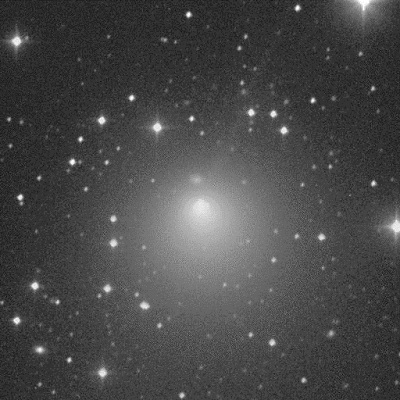
The comet that sources and is therefore responsible for the shower is 8P/Tuttle (also known as Tuttle's Comet or Comet Tuttle). It has a period of 13.6 years and during the last perihelion on January 27, 2008 was visible telescopically. On January 1, 2008 it passed Earth at a distance of 0.25282 AU (37,821,000 km or 23,501,000 miles) and anticipation was high that the 2007 and 2008 showers may produce much increased activity but that was not to be. In the end only a small increase was noted.
Geminids meteor shower peaks on December 13/14, 2016
The Geminids or "Winter Fireworks" is one of the finest annual meteor showers with this year's shower peaking on the night of December 13/14. During peak activity up to 120 meteors per hour (Zenithal Hourly Rate) can be seen under perfect conditions. Of the other annual showers only the Perseids in August comes close to attaining such highs. Unfortunately, the full Moon in neighbouring Taurus will significantly interfere during peak time and wash out many of the meteors.

Algol eclipse dates and times for December 2016
Algol (β Per) is a bright eclipsing binary system located in the northern constellation of Perseus and one of the best-known variable stars in the sky. Often referred to as the "Demon Star" most of the time it shines at mag. +2.1 but every two days, 20 hours and 49 minutes the star suddenly dips in brightness to mag. +3.4, remaining dim for about 10 hours before returning to its original state.
Why the change in brightness? The Algol system consists of at least three-stars (β Per A, β Per B and β Per C) with the orbital plane of Algol A and B directly in line with the Earth. The regular dips in brightness occur when the dimmer B star moves in front of and eclipses the brighter A star. There is also an extra dimension in that a secondary eclipse occurs when the brighter star occults the fainter secondary resulting in a very small dip in brightness that can be detected with photo-electrical equipment.

The Planets this Month - December 2016
Mercury
Mercury reaches greatest elongation east (20.8 degrees) on December 11th. From southern and tropical latitudes the closest planet to the Sun remains visible after sunset above the southwestern sky for a short time for about the first 3 weeks of the month. Its brightness fades from mag. -0.5 to +0.5 during this time.
Those living further north will find it much more difficult to spot the planet this month due to its declination of -24 degrees. Fast moving Mercury then reaches inferior conjunction on December 28th.
Venus
Venus is now a magnificent early evening object that continues to improve in brightness and visibility as the month progresses. The unmistakable planet completely dominates the western sky after sunset and by months end sets up to 4 hours after the Sun.
Venus is now gradually moving northwards in declination, starting the month in Sagittarius before moving into Capricornus on December 8th where it remains for the rest of the year. On December 3rd, the waxing crescent Moon passes 6 degrees north of the planet providing nice early evening viewing.
Leonids meteor shower peaks during the morning of November 18, 2016
The Leonids is a famous meteor shower that's peaks this year during the morning of November 18th. What adds to the mystique of this shower is its fantastic history. Over the years it has produced some of the most spectacular storms ever seen including a famous outburst of incredible proportions in 1833. Even though no super storm is predicted this year it's still an anticipated event on the celestial calendar. However, unfortunately the 83% illuminated waning gibbous Moon in Gemini will significantly interfere at peak time and therefore wash out all but the brightest meteors.

Five superb Northern Hemisphere naked eye and binocular open clusters visible during Winter
The long cold nights of the Northern Hemisphere winter months are populated with some of the finest constellations in the sky. During the months of December, January and February many celestial gems are visible in the evening sky. They include spectacular open clusters, stunning nebulae as well as numerous bright stars. Below is a list of five of the best open clusters visible at this time of year; all of which can be spotted with the naked eye and each one a superb binocular object.
5. M35
We start the countdown with the faintest and smallest cluster on our list, M35 in Gemini. At mag. +5.2 it appears to the naked eye as a somewhat misty patch of light. Surprisingly it wasn't discovered until 1745-46. When seen through binoculars M35 is a fantastic sight with the brightest dozen or so stars resolvable. Enhancing the view is a hazy glow surrounding the stars. Telescopes reveal many more stars but the glow effect disappears. M35 is 2,800 light years distant and spans 28 arc minutes which is similar to the full Moon diameter. It's estimated to contain up to 200 stars.
Located about 15 arc minutes southwest of M35 is open cluster NGC 2158, which at mag. +8.6 is faintly visible with binoculars.
Northern Taurids meteor shower peaks on November 12, 2016
The northern part of the Taurid meteor shower peaks this year on November 12th. Although the number of meteors that can be seen per hour is low the Northern Taurids often produces spectacular fireballs. When bright Taurids arrive authorities are usually in for a busy night with a flurry of UFO reports. Unfortunately, the almost full Moon in Pisces will significantly interfere.
Parent Comet and Radiant
The Taurids have long been identified as an old meteor stream with the first recorded observations made in 1869. Despite frequently seen during the remainder of the 19th century it wasn't until 1918 it was realised that a new shower had been found.
Supermoon occurs on November 14, 2016
This month's full Moon takes place on November 14th and it will be a so called "Supermoon", a full Moon occurring at or near perigee (closest point to Earth). As a result, the Moon appears larger and brighter in the sky than average. This is also the closest Supermoon since January 26, 1948.
The reason why such an event is possible is because the Moon's orbit around the Earth is not circular and therefore the bodies are constantly varying in separation. The distance between the Moon and the Earth at perigee can be as small as 356,400 km (221,460 miles) and at apogee as far away as 406,700 km (252,710 miles). This corresponds to a maximum and minimum apparent size of the Moon of 33.5 and 29.4 arc minutes respectively.

Algol eclipse dates and times for November 2016
Algol (β Per) is a bright eclipsing binary system located in the northern constellation of Perseus and one of the best-known variable stars in the sky. Often referred to as the "Demon Star" most of the time it shines at mag. +2.1 but every two days, 20 hours and 49 minutes the star suddenly dips in brightness to mag. +3.4, remaining dim for about 10 hours before returning to its original state.
Why the change in brightness? The Algol system consists of at least three-stars (β Per A, β Per B and β Per C) with the orbital plane of Algol A and B directly in line with the Earth. The regular dips in brightness occur when the dimmer B star moves in front of and eclipses the brighter A star. There is also an extra dimension in that a secondary eclipse occurs when the brighter star occults the fainter secondary resulting in a very small dip in brightness that can be detected with photo-electrical equipment.